August 11th, 2026
How to Choose the Right Industrial Wipers for Your Cleaning and Maintenance Needs
Choosing the right cleaning materials can have a major impact on workplace efficiency, equipment maintenance, and overall cleanliness. Coastal Wipers provides businesses with professional wiping solutions designed for a wide range of industrial and commercial applications. From manufacturing facilities and automotive shops to maintenance departments and warehouses, the right industrial wipers can help workers remove oil, grease, dirt, dust, water, and other contaminants more efficiently. However, with so many materials, sizes, textures, and absorbency levels available, knowing which product is best for a specific task can be challenging.
Industrial environments often require more than ordinary paper towels or household cleaning cloths. Workers may need wiping materials that are strong enough for heavy-duty maintenance, absorbent enough to handle spills, or low-lint enough for sensitive equipment. Selecting the appropriate product starts with understanding the cleaning task and matching the characteristics of the wiper to the job.
This guide explains what industrial wipers are, the different types available, the factors businesses should consider when purchasing them, and how to choose the right wiping solution for everyday cleaning and maintenance needs.
What Are Industrial Wipers?
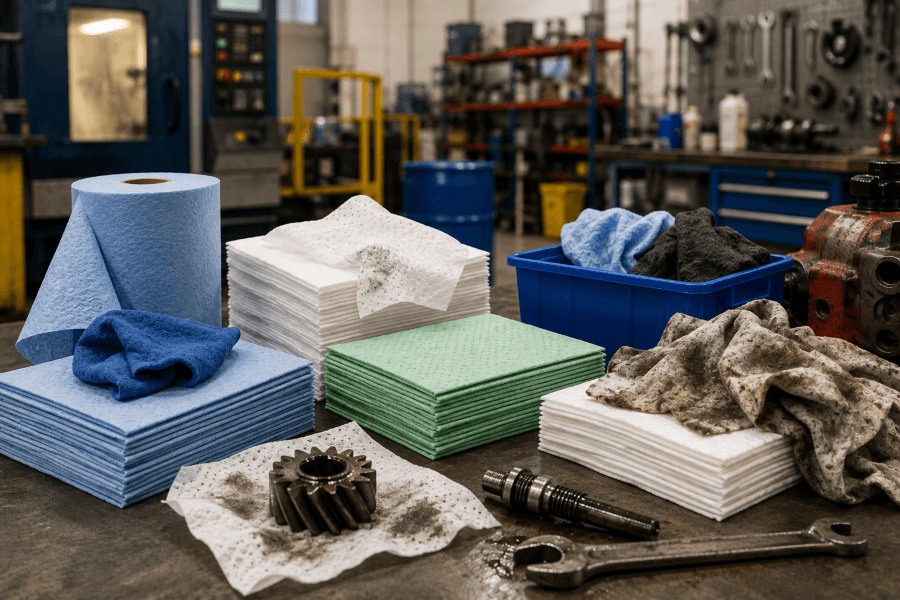
Industrial wipers are cleaning materials designed specifically for demanding commercial, manufacturing, maintenance, and industrial environments. They are used for wiping equipment, cleaning work surfaces, absorbing liquids, removing grease, preparing surfaces, and handling spills.
Unlike standard household towels, industrial wipers are available in materials and designs intended for specific workplace applications. Depending on the product, they may provide high absorbency, durability, low-lint performance, chemical resistance, or specialized cleaning capabilities.
Common materials used for industrial wipers include:
- Non-woven synthetic fibers
- Cellulose blends
- Polyester
- Polypropylene
- Cotton and recycled textiles
- Microfiber
- Specialized absorbent materials
Because different jobs require different characteristics, there is no single industrial wiper that is ideal for every application.
For example, a mechanic cleaning grease from an engine may need a durable and highly absorbent wiper, while an employee cleaning a sensitive component may need a low-lint material.
Why Choosing the Right Industrial Wipers Matters
Industrial wiping materials are often considered a basic workplace supply, but they can influence how efficiently employees perform routine maintenance and cleaning.
The wrong wiping material can create unnecessary problems. A cloth that tears easily may require workers to use several pieces for one task. A low-absorbency material may spread oil instead of removing it. A high-lint cloth can leave fibers behind on equipment or finished surfaces.
The right industrial wipers can help businesses:
- Improve cleaning efficiency
- Reduce material waste
- Absorb spills more effectively
- Remove oil and grease
- Maintain equipment
- Reduce lint contamination
- Support routine maintenance
- Keep work areas cleaner
- Improve worker convenience
When selecting wiping products, businesses should consider performance rather than focusing only on the purchase price.
1. Identify the Cleaning Task
The first step in choosing industrial wipers is understanding exactly what the product will be used for.
Different cleaning jobs require different properties.
For example:
Oil and grease removal: Choose durable, absorbent wipers capable of handling oily contaminants.
General maintenance: Consider versatile industrial wiping cloths that can be used for tools, equipment, and work surfaces.
Spill cleanup: Select highly absorbent wipers designed to quickly collect liquids.
Surface preparation: Look for materials that provide reliable cleaning without leaving excessive lint or residue.
Precision cleaning: Consider low-lint or specialized wipers for sensitive components and surfaces.
Creating a list of your most common cleaning tasks can make the purchasing process much easier.
2. Consider Absorbency
Absorbency is one of the most important characteristics to evaluate when selecting industrial wipers.
Businesses may need to absorb:
- Water
- Oil
- Coolants
- Lubricants
- Cleaning solutions
- Grease
- Other workplace liquids
A highly absorbent wiper can help workers clean spills faster and reduce the number of wiping materials needed.
However, maximum absorbency is not always necessary. For light dusting or surface cleaning, a lower-absorbency material may be perfectly suitable.
Think about the types and volumes of liquids your employees regularly encounter before choosing a product.
3. Evaluate Wiper Strength and Durability
Industrial cleaning can involve rough surfaces, sharp edges, heavy equipment, and repeated wiping. A wiper that tears easily can slow down maintenance work and increase consumption.
Durability should therefore be an important purchasing consideration.
When evaluating industrial wipers, consider whether the material can withstand:
- Heavy wiping
- Rough surfaces
- Greasy equipment
- Repeated passes
- Moisture
- Common cleaning solutions
- Mechanical cleaning tasks
Heavy-duty applications may require stronger wiping materials, while light cleaning tasks may not require the same level of durability.
The goal is to match the strength of the wiper with the demands of the job.
4. Pay Attention to Lint Levels
Lint can be a significant concern in certain industrial applications.
Some wiping materials can leave behind fibers after use. This may not matter when cleaning a dirty workshop floor or greasy tool, but it can become an issue when cleaning sensitive equipment, finished products, machinery components, or surfaces that require a clean finish.
If lint contamination is a concern, consider low-lint industrial wiping cloths specifically designed for applications where fiber residue needs to be minimized.
Businesses should identify which cleaning tasks require low-lint performance and reserve specialized wipers for those applications.
5. Choose Between Reusable and Disposable Wipers
Another important decision is whether your business needs reusable or disposable wiping materials.
Reusable Wipers
Reusable wiping cloths can be collected, cleaned, and used again when appropriate. They may be suitable for general-purpose maintenance and cleaning applications.
Potential benefits include:
- Multiple uses
- Reduced disposable material consumption
- Familiar cloth-like handling
- Suitability for many routine maintenance tasks
However, reusable products require collection, handling, laundering, and storage procedures.
Disposable Wipers
Disposable wipers are designed for single-use or limited-use applications. After completing a cleaning task, the wiper can be discarded according to applicable workplace waste-handling procedures.
Disposable products can be particularly useful when:
- Contamination needs to be controlled
- Cross-contamination is a concern
- Cleaning tasks involve heavy grease or oil
- Fast cleanup is important
- Laundering is impractical
- A clean wiper is needed for each task
Neither option is automatically better. The right choice depends on your workplace processes and cleaning requirements.
6. Consider the Type of Contaminant
Not all contaminants behave the same way.
Oil, grease, water, dust, chemicals, and other substances can require different wiping characteristics.
For oily environments, absorbent and durable materials may be most appropriate.
For dust and general surface cleaning, a soft wiping material may work better.
For applications involving chemicals or cleaning solutions, businesses should ensure that the selected material is appropriate for the intended use and follow the chemical manufacturer’s safety instructions.
Understanding the contaminant before purchasing your industrial cleaning wipes can prevent employees from using the wrong product.
7. Think About Surface Type
The surface being cleaned is just as important as the substance being removed.
Industrial environments may contain:
- Metal surfaces
- Painted equipment
- Glass
- Plastic
- Stainless steel
- Machinery
- Tools
- Finished components
- Electronics and sensitive equipment
A rough, heavy-duty wiping material may be excellent for removing grease from machinery but inappropriate for a delicate finished surface.
For sensitive applications, businesses may need softer, low-lint materials.
Before selecting a wiper, determine whether the surface requires gentle cleaning, aggressive wiping, high absorbency, or low-lint performance.
8. Select the Appropriate Wiper Size
Wiper size can influence both productivity and material consumption.
Large industrial wipers may be useful when workers need to:
- Absorb larger spills
- Clean large equipment
- Wipe extensive surfaces
- Handle heavy-duty maintenance tasks
Smaller wipers may be more convenient for:
- Tools
- Small components
- Detailed cleaning
- Precision maintenance
- Quick wipe-downs
Some businesses benefit from keeping several sizes available. This allows employees to select an appropriately sized product instead of using a large wiper for a small task.
9. Consider Texture and Cleaning Performance
Texture can affect how effectively a wiper removes dirt, grease, and other contaminants.
A textured wiping material can provide additional friction for removing stubborn substances from equipment and tools.
Smoother materials may be more appropriate for:
- Polished surfaces
- Glass
- Finished products
- Sensitive components
- Detailed cleaning
The best texture depends on the application.
If your facility performs several different types of cleaning, consider maintaining different wiper options for different jobs.
10. Think About Chemical Compatibility
Many industrial environments use solvents, degreasers, lubricants, disinfectants, and other cleaning products.
When choosing industrial cleaning wipes, businesses should consider whether the wiping material is suitable for the intended chemical application.
Always review product information and applicable safety documentation before using a wiper with a chemical.
Employees should also follow established workplace procedures for chemical handling, ventilation, personal protective equipment, storage, and disposal.
Choosing a suitable wiping material is only one part of maintaining a safe cleaning process.
11. Calculate the Total Cost of Use
Price per package is not the only factor businesses should consider.
A less expensive wiper may become more costly if workers need to use several pieces to complete one job.
When evaluating industrial wipers, consider:
- Price per unit
- Absorbency
- Durability
- Number of wipers used per task
- Labor time
- Waste volume
- Storage
- Laundering requirements for reusable products
- Frequency of replacement
For example, a stronger wiper that completes a job with one piece may provide better overall value than a cheaper product that requires three or four pieces.
The most useful measurement is often cost per completed cleaning task, rather than cost per individual wiper.
Industrial Wiping Cloths for Different Industries
Different industries have different cleaning requirements.
Automotive Repair
Automotive technicians frequently work with oil, grease, coolant, dirt, and other contaminants. Durable industrial wiping cloths can help clean tools, engines, components, and work surfaces.
Manufacturing
Manufacturing facilities may need wipers for machinery maintenance, production equipment, oil removal, surface cleaning, and spill response.
Warehousing
Warehouse employees may use wiping products for equipment, tools, spills, workstations, and routine facility maintenance.
Metalworking
Metalworking operations can generate oils, lubricants, metal dust, and other contaminants. Durable and absorbent wipers can support regular equipment cleaning.
Maintenance Departments
Facility maintenance teams often require versatile products capable of handling a wide range of routine cleaning jobs.
Why a Multi-Wiper Approach Can Be Effective
Businesses do not necessarily need to use the same wiping material throughout their entire facility.
A better approach may be to establish a small selection of products for different tasks.
For example:
- Heavy-duty wipers for grease and machinery
- Absorbent wipers for liquid spills
- Low-lint wipers for sensitive surfaces
- Microfiber products for detailed cleaning
- Disposable wipers for contamination-sensitive applications
- Reusable wiping cloths for general maintenance
This approach allows employees to choose the right material for the task while avoiding unnecessary use of specialized products.
Common Mistakes When Buying Industrial Wipers
Businesses can make several common mistakes when selecting wiping products.
Choosing Based Only on Price
The cheapest product may not provide the best value if it tears easily or requires multiple pieces.
Buying One Product for Every Application
Different cleaning jobs require different characteristics. A universal solution may not provide the best performance.
Ignoring Lint
Lint may not matter for some tasks but can create problems for sensitive applications.
Overlooking Absorbency
A poor absorbency rate can increase consumption and cleaning time.
Forgetting Storage Requirements
Wipers should be stored in a clean, organized location where they can be easily accessed by employees.
Not Evaluating Actual Usage
Businesses should monitor how quickly wiping materials are consumed. High usage may indicate that employees need a more effective product or better task-specific selection.
How to Build an Efficient Industrial Wiping Program
Once you select the right industrial wipers, establish a simple system for managing them.
Start by identifying the major cleaning stations throughout your facility.
Then determine:
- Which wiper should be used for each task?
- Where should the products be stored?
- How much inventory is needed?
- Which products are reusable?
- How should contaminated materials be handled?
- How frequently should inventory be reordered?
- Are employees using the correct product?
Clear labeling and employee training can make it easier for workers to choose the appropriate wiper.
Regularly reviewing consumption can also help identify opportunities to reduce waste and improve efficiency.
Industrial Wipers vs. Ordinary Cleaning Materials
Ordinary household paper towels may be suitable for light cleaning, but industrial environments often demand more.
Industrial wipers are designed around workplace requirements such as:
- Durability
- Absorbency
- Consistency
- Low-lint performance
- Heavy-duty cleaning
- Specialized applications
This makes them a practical choice for businesses where cleaning and maintenance are part of daily operations.
The right product can help employees complete tasks efficiently without relying on materials that are not designed for industrial use.
Find the Right Industrial Wipers for Your Business
Choosing the right industrial wipers starts with understanding your cleaning and maintenance requirements. Consider the contaminant, surface, absorbency requirements, durability, lint level, size, texture, chemical compatibility, and whether reusable or disposable products are most appropriate.
Businesses should also evaluate the total cost of use rather than simply comparing package prices. A high-performing wiper can potentially reduce material consumption and save valuable labor time.
Coastal Wipers offers professional wiping solutions for businesses with a variety of cleaning and maintenance requirements. Its product range includes wiping cloths, non-woven wipers, microfiber cleaning products, and other solutions designed for commercial and industrial applications.
Whether your business needs industrial wiping cloths for routine maintenance, disposable wipers for contamination-sensitive applications, or specialized industrial cleaning wipes for demanding tasks, selecting the right product can make everyday cleaning more efficient.
Instead of asking, “Which wiper is cheapest?” ask, “Which wiper performs best for this job?”
That shift in thinking can help your business improve cleaning efficiency, reduce unnecessary material usage, support equipment maintenance, and create a more organized workplace cleaning program.
