August 11th, 2026
5 Types of Industrial Wiping Cloths and When to Use Each One
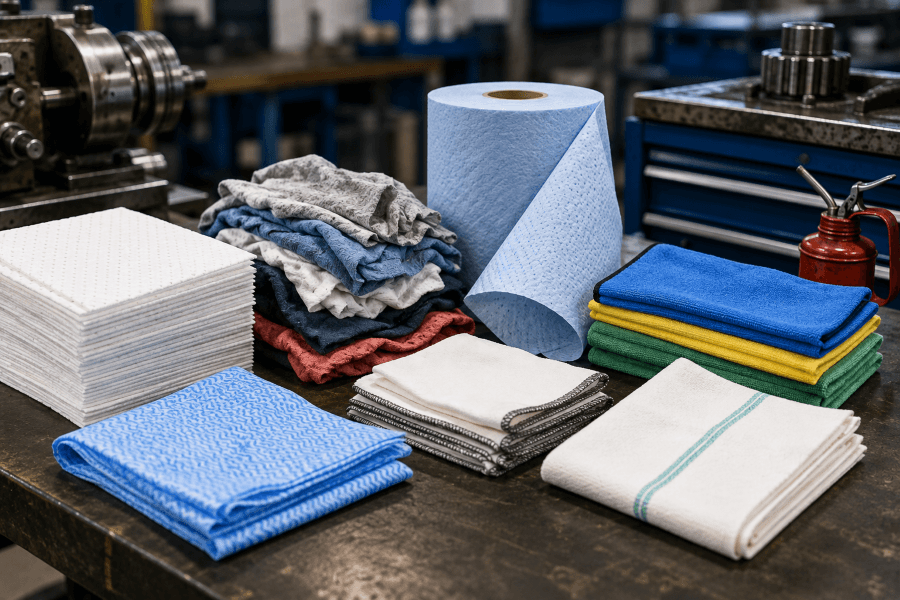
Choosing the right wiping product can make everyday cleaning, maintenance, and production tasks more efficient. Coastal Wipers offers a variety of professional wiping solutions for businesses that need dependable performance across industrial, commercial, automotive, and maintenance environments. From absorbent industrial wiping cloths to microfiber products, shop towels, and industrial rags, the right material can help workers remove oil, grease, dust, dirt, water, and other contaminants while keeping work areas cleaner and more organized.
Not every wiping cloth is designed for the same job. A cloth that works well for cleaning greasy machinery may not be appropriate for polishing a finished surface. Likewise, a highly absorbent material may be ideal for spill cleanup but unnecessary for light dusting.
Understanding the differences between common wiping materials makes it easier to select the right product for each task. In this blog, we’ll explore five common types of industrial wiping cloths, when to use each one, and what factors businesses should consider when choosing cleaning cloths for their operations.
What Are Industrial Wiping Cloths?
Industrial wiping cloths are cleaning materials used in manufacturing facilities, automotive shops, warehouses, maintenance departments, machine shops, and other commercial environments.
They are designed to perform tasks that ordinary household towels or paper products may not handle efficiently. Depending on the material, industrial wiping cloths can offer characteristics such as:
- High absorbency
- Durability
- Low-lint performance
- Softness
- Abrasion resistance
- Reusability
- Disposable convenience
- Chemical compatibility
Industrial wiping cloths may be manufactured from new materials or made from recycled textiles. The best choice depends on the cleaning application.
Some businesses use one primary wiping product for most tasks, while others maintain several types of wiping materials so employees can select the right option for each job.
Why Does the Type of Wiping Cloth Matter?
Choosing the right cloth isn’t just about getting a surface clean. The wrong material can make a task slower, increase material consumption, or leave behind unwanted lint and residue.
For example, imagine a technician cleaning grease from a machine. A lightweight cloth that absorbs very little oil may require several pieces to complete the job. On the other hand, a durable, absorbent industrial rag may handle the task with fewer materials.
Similarly, using a rough industrial rag on a delicate finished surface could potentially cause unwanted marks or leave behind fibers.
The right wiping material should match:
- The type of contaminant
- The surface being cleaned
- The level of cleaning required
- The desired absorbency
- The required durability
- Whether lint is a concern
- Whether the cloth will be reused
- The overall cost of use
Let’s look at five common types of industrial wiping cloths and their typical applications.
1. Cotton Industrial Rags
Cotton industrial rags are among the most familiar wiping materials used in workshops, maintenance departments, garages, and industrial facilities.
These rags can be made from recycled cotton textiles and are available in various weights, sizes, textures, and absorbency levels.
Cotton is naturally absorbent, making it useful for cleaning and wiping tasks involving water, oil, grease, and other liquids.
When Should You Use Cotton Industrial Rags?
Cotton industrial rags are well suited for general-purpose applications such as:
- Automotive maintenance
- Machine cleaning
- Tool wiping
- Grease removal
- Oil cleanup
- General workshop maintenance
- Wiping hands
- Cleaning work surfaces
They are especially useful when durability and absorbency are more important than extremely low-lint performance.
Advantages of Cotton Rags
Cotton industrial rags can provide several benefits:
- Good absorbency
- Soft feel
- Reusable potential
- Versatile applications
- Availability in different sizes
- Practical for heavy-duty environments
However, businesses should recognize that recycled textile rags can vary in texture and composition. For applications requiring highly consistent performance, a specialized industrial wiping product may be more appropriate.
2. Non-Woven Industrial Wiping Cloths
Non-woven wiping cloths are manufactured rather than woven from traditional threads. They can be made from materials such as synthetic fibers, cellulose, or combinations of different fibers.
These products are popular in industrial environments because manufacturers can engineer them to provide specific characteristics.
Depending on the product, non-woven wiping materials can offer:
- Consistent construction
- Strong wet and dry performance
- Absorbency
- Low-lint characteristics
- Disposable convenience
- Resistance to tearing
When Should You Use Non-Woven Wipers?
Non-woven industrial wiping cloths can be useful for:
- Manufacturing maintenance
- Surface preparation
- Oil and grease cleanup
- Equipment cleaning
- General industrial wiping
- Automotive applications
- Spill response
- Production environments
They can be particularly useful when businesses want a consistent wiping material rather than a variable recycled textile.
Why Choose Non-Woven Materials?
One of the major benefits is consistency.
Because non-woven materials are manufactured to specific specifications, businesses can select products based on characteristics such as absorbency, thickness, strength, and lint performance.
This can make them a practical choice for operations where predictable performance matters.
3. Microfiber Cleaning Cloths
Microfiber cleaning cloths are made from extremely fine synthetic fibers. Their structure allows them to capture dust, dirt, and other particles effectively.
Microfiber products are commonly used when businesses need a soft cleaning material that can provide detailed surface cleaning.
They are especially popular for cleaning surfaces where appearance matters.
When Should You Use Microfiber Cleaning Cloths?
Microfiber cleaning cloths can be useful for:
- Polishing
- Detailed equipment cleaning
- Glass cleaning
- Stainless steel surfaces
- Automotive detailing
- Dust removal
- Finished surfaces
- General surface maintenance
Their soft texture can make them suitable for applications where a rougher industrial rag may be inappropriate.
Benefits of Microfiber
Microfiber can offer:
- Soft texture
- Effective dust collection
- Detailed cleaning
- Reusable potential
- Reduced lint compared with some traditional cloths
- Good surface coverage
Microfiber is not necessarily the best choice for every heavy-duty application. Extremely greasy or heavily contaminated jobs may require a more absorbent or disposable material.
For detailed cleaning and finishing work, however, microfiber can be an excellent option.
4. Shop Towels
Shop towels are commonly used in automotive shops, garages, maintenance departments, and workshops.
They are designed for everyday wiping tasks and can be made from a range of textile materials.
Shop towels can be used for both light and moderately demanding cleaning tasks, depending on their construction.
When Should You Use Shop Towels?
Shop towels can be useful for:
- Automotive repair
- Tool cleaning
- General maintenance
- Wiping hands
- Cleaning workstations
- Equipment maintenance
- Removing grease and oil
- Drying surfaces
They are particularly convenient in environments where employees need wiping materials throughout the day.
Reusable Shop Towels
Some shop towels can be laundered and reused. This may be useful for businesses that have established systems for collecting, cleaning, and returning reusable towels.
Reusable shop towels can help reduce the need to purchase new wiping materials for every task.
However, businesses should have appropriate procedures for handling contaminated materials and determine whether laundering is practical for their specific operation.
What Makes a Good Shop Towel?
When selecting shop towels, consider:
- Absorbency
- Strength
- Size
- Texture
- Lint
- Reusability
- Durability
- Overall cost per use
The best shop towel depends on what your employees are cleaning and how frequently the towels will be used.
5. Specialty Industrial Wiping Materials
The fifth category includes specialized wiping materials designed for specific industrial applications.
Not every cleaning task can be handled effectively with a basic cotton rag or shop towel. Some businesses require materials designed around a particular performance characteristic.
Specialty wiping materials can include products designed for:
- Low-lint applications
- Heavy oil absorption
- Chemical handling
- Precision cleaning
- Spill response
- Sensitive surfaces
- Manufacturing processes
- Controlled environments
When Should You Use Specialty Wipers?
Consider specialty wiping materials when a standard cloth doesn’t provide the required performance.
For example, a facility working with precision components may need a low-lint material. A business dealing with frequent liquid spills may need highly absorbent wiping materials.
Specialty products can also be useful when businesses need consistent performance across a specific production or maintenance process.
How to Compare Different Industrial Wiping Cloths
Now that we’ve covered five common categories, it’s important to understand how to compare them.
Absorbency
If your business regularly deals with oil, water, coolant, or other liquids, absorbency should be a priority.
Durability
Heavy-duty cleaning requires materials that can withstand repeated wiping without tearing apart.
Lint
Low-lint materials may be important for sensitive equipment, finished surfaces, and precision applications.
Texture
A rough texture can help remove stubborn contaminants, while a soft texture may be better for delicate surfaces.
Size
Large wiping cloths are useful for spills and large equipment. Smaller cloths may be better for detailed work.
Reusability
Determine whether the material can and should be reused based on your cleaning processes and contamination levels.
Disposal
If using disposable wiping materials, consider how used products will be handled and disposed of according to applicable workplace requirements.
Industrial Wiping Cloths by Application
Different workplaces often have different wiping needs.
Automotive Shops
Automotive technicians regularly deal with oil, grease, coolant, dirt, and other contaminants.
Cotton industrial rags, shop towels, and absorbent industrial wiping cloths can all be useful depending on the task.
Manufacturing Facilities
Manufacturing environments may require several types of wiping materials for machinery, tools, production equipment, and workstations.
Non-woven wiping materials may be particularly useful when consistency is important.
Warehouses
Warehouse teams may need wiping products for equipment, spills, tools, and general maintenance.
Versatile shop towels or general-purpose industrial rags can often handle these tasks effectively.
Maintenance Departments
Maintenance teams typically require a variety of wiping materials because they may work on many different types of equipment and surfaces.
Keeping several types of cloths available can help workers select the right product for each task.
Automotive Detailing
Microfiber cleaning cloths are commonly useful for detailing, polishing, and cleaning surfaces where appearance matters.
How to Choose the Right Cleaning Cloth
When purchasing cleaning cloths for your business, start with the task rather than the product.
Ask the following questions:
What are we cleaning?
Determine whether employees are cleaning machinery, tools, floors, finished surfaces, components, or workstations.
What are we removing?
Oil, grease, water, dust, and chemicals can all require different wiping characteristics.
Does lint matter?
If the answer is yes, consider low-lint industrial wiping materials.
Do we need reusable products?
Reusable materials can be useful for appropriate applications, but they require proper collection and laundering procedures.
How durable does the cloth need to be?
Heavy-duty applications require stronger materials than light dusting.
How much material do we use?
Monitor consumption. If employees are using several cloths for a single task, a higher-performance product may provide better value.
Common Mistakes Businesses Make When Choosing Wiping Materials
Mistake 1: Choosing Only Based on Price
A low purchase price doesn’t always equal low operating cost. A product that tears easily or absorbs poorly may increase consumption.
Mistake 2: Using One Cloth for Everything
Different jobs require different characteristics. A single general-purpose cloth may not provide optimal results across every application.
Mistake 3: Ignoring Lint
Lint can become a problem when cleaning sensitive or finished surfaces.
Mistake 4: Overlooking Storage
Even good wiping materials can become contaminated if stored improperly. Keep clean products protected from dirt, moisture, and unnecessary exposure.
Mistake 5: Not Training Employees
Workers should understand which wiping material is appropriate for different tasks.
Simple labeling and designated storage areas can make product selection easier.
Why Quality Industrial Wiping Cloths Can Improve Efficiency
Industrial cleaning is often repeated throughout the day. Small improvements in each task can add up over time.
A high-quality wiping material may help workers:
- Complete cleaning tasks faster
- Use fewer pieces
- Reduce repeated wiping
- Improve surface cleanliness
- Reduce unnecessary waste
- Maintain equipment more effectively
For businesses with large maintenance teams, even a small improvement in wiping efficiency can have a meaningful operational impact.
Creating a Wiping Material Strategy for Your Business
Instead of purchasing wiping products without a plan, businesses can create a simple wiping material strategy.
Start by identifying your most common cleaning tasks.
Then assign a suitable product to each application.
For example:
Heavy grease: Durable cotton industrial rags or absorbent industrial wipers.
General maintenance: Versatile shop towels or general-purpose wiping cloths.
Detailed cleaning: Microfiber cleaning cloths.
Low-lint applications: Specialized non-woven or low-lint wipers.
High-volume cleanup: Disposable or highly absorbent wiping materials.
Once the system is established, train employees and monitor product consumption.
Review the program periodically to determine whether the selected materials are providing the expected performance.
Choose the Right Industrial Wiping Cloths for Your Workplace
Selecting the right industrial wiping cloths doesn’t have to be complicated. The key is to understand what your employees are cleaning and choose a wiping material that matches the task.
Cotton industrial rags can be useful for general-purpose heavy-duty cleaning. Non-woven wiping materials can provide consistency and specialized performance. Microfiber cleaning cloths can be excellent for detailed and surface-sensitive applications. Shop towels can provide practical everyday performance in workshops and maintenance environments. Specialty wiping materials can address applications where standard cloths are not enough.
Coastal Wipers provides businesses with a range of professional wiping solutions to support different cleaning, maintenance, and industrial applications. By selecting wiping materials based on absorbency, durability, lint, texture, size, reusability, and intended use, businesses can create a more efficient and effective cleaning program.
The goal isn’t simply to find a cloth that can wipe a surface. The goal is to choose a material that performs efficiently for the specific job.
With the right combination of cleaning cloths, shop towels, industrial rags, and other wiping materials, businesses can help their teams maintain cleaner work areas, support routine equipment maintenance, and complete everyday cleaning tasks with greater efficiency.
